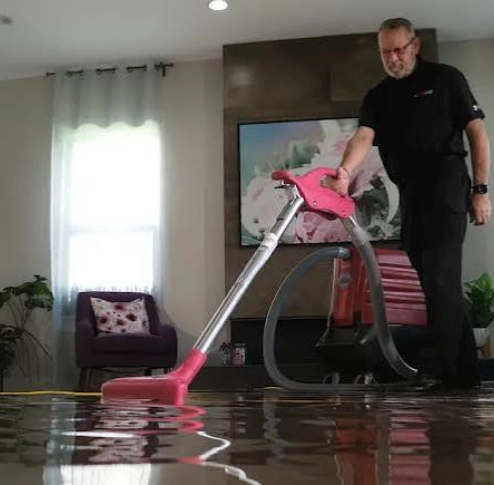
Mitigation stops water damage from getting worse. Restoration repairs and rebuilds what the water damaged. Mitigation always comes first, because nothing should be rebuilt until the structure is fully dry.
Most water damage jobs need both. Knowing where one ends and the other begins makes it easier to follow what’s happening in your home, read an estimate and ask the right questions.
The Short Answer
- Mitigation: stop the water, remove it, take out what can’t be dried, and dry the structure. Done in days.
- Restoration: replace and repair what was removed or damaged, then finish the space. Takes days to weeks, depending on the scope.
What Water Mitigation Includes
Mitigation is the emergency stage. Its goal is to limit the damage and get the building dry.
- Inspection and moisture mapping to find where the water went, including inside walls and under flooring.
- Water extraction from floors, carpet and pad.
- Moving or protecting furniture and belongings.
- Removing materials that can’t be dried in place, such as soaked carpet pad, wet insulation or drywall that has wicked water.
- Setting up air movers and dehumidifiers based on moisture readings.
- Daily moisture checks until materials reach a dry standard.
- Photos and moisture logs that document each step.
What Mitigation Doesn’t Include
Mitigation doesn’t put anything back. When it’s done, you may have open wall cavities, bare subfloor and missing baseboards. That’s expected. It means the wet materials are gone and the structure is dry enough to rebuild.
What Water Restoration Includes
Restoration starts once moisture readings confirm the structure is dry. It returns the space to how it was before the damage.
- Replacing insulation and drywall.
- Taping, texturing and painting.
- Installing new flooring, pad and baseboards.
- Repairing or replacing cabinets and trim.
- Structural repairs to subfloor or framing, if needed.
How Long Each Stage Takes
Drying for most clean-water jobs takes about three to five days. Water that sat longer, soaked into hardwood or reached a large area can take more time.
Restoration timelines vary more. Replacing a section of drywall and baseboard might take a few days. A full basement rebuild with new flooring and cabinets can take several weeks, partly because of material orders and scheduling.
Why the Order Matters
Rebuilding before the structure is dry traps moisture behind new materials. New drywall over damp studs can grow mold inside the wall. New flooring over a wet subfloor can cup or buckle within weeks.
The EPA recommends drying wet building materials within 24 to 48 hours to prevent mold growth. That’s why mitigation starts right away, while restoration waits for the moisture readings. If water is in your home now, here’s what to do in the first 24 hours.
Example: A Burst Pipe in a Finished Basement
Many split-level and rambler homes around the Twin Cities have finished lower levels with carpet and drywall. Here’s how a typical burst pipe in one of those basements moves through both stages.
Mitigation (about 3 to 5 days)
- Day 1: Water is shut off. Standing water is extracted. The wet carpet pad is pulled. The bottom of the drywall is cut away where readings show water wicked up the wall. Air movers and dehumidifiers are set up.
- Days 2 to 4: Moisture readings are taken each day. Equipment is moved or adjusted as areas dry.
- Final day: Readings match the dry areas of the home. The equipment is removed.
Restoration (about 1 to 3 weeks)
- New insulation and drywall are installed where material was cut out.
- The walls are taped, textured and painted.
- New pad goes down, the carpet is reinstalled or replaced, and the baseboards go back on.
For a closer look at the first stage, see how mitigation works for Brooklyn Park homes.
H2: Do You Need One Company for Both?
No. Some homeowners hire one company for mitigation and a separate contractor for repairs. Using one company for both has practical benefits:
- The same moisture records carry from drying into rebuilding.
- There’s no gap while you find and schedule a second contractor.
- One point of contact for questions about the job.
Insurers often treat mitigation and repairs as separate parts of a claim, so keep the paperwork for each stage. SIMESOTA Restoration handles both mitigation and construction restoration. You can read more about the full water damage restoration process.
Frequently Asked Questions
Is water mitigation the same as water damage cleanup?
Mostly. “Cleanup” usually means removing water. Mitigation also includes finding hidden moisture, removing materials that can’t be saved, drying the structure and checking readings until the job is done.
Can restoration start before everything is dry?
It shouldn’t. Repairs should wait until moisture readings show the materials are dry. Closing up a wet wall or laying flooring over a damp subfloor can lead to mold and repeat repairs.
Does mitigation always mean removing drywall?
No. If drying starts quickly and the water didn’t wick far, walls can often be dried in place. Moisture readings decide what stays and what comes out.
How do you know when mitigation is finished?
When moisture readings in the affected materials match readings from dry, unaffected areas of the same home. A floor or wall can feel dry while still holding water inside.
Is mold remediation part of mitigation?
No. Mitigation aims to prevent mold by drying the structure quickly. If mold has already grown, removing it is a separate service with its own containment and cleaning steps.
SIMESOTA Restoration has completed 250 jobs across the Twin Cities and holds a 5.0 Google rating from 111 reviews. Have water in your home now? Call (612) 919-6555, 24/7.