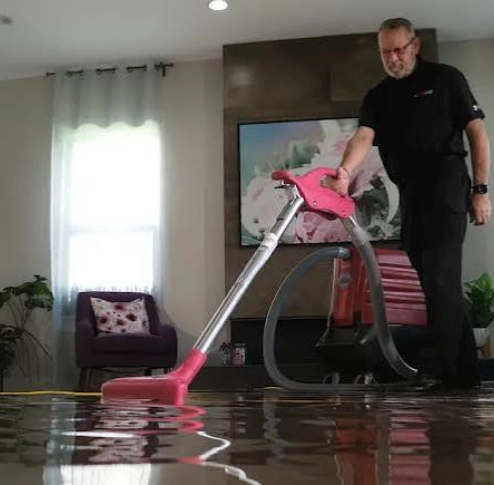
Some flooring can be dried and kept after water damage, and some can’t. The answer depends on four things: the type of flooring, the type of water, how long it sat and what’s underneath. Carpet and solid hardwood can often be saved when drying starts quickly. Laminate usually can’t be saved once it swells. Tile and vinyl plank usually survive, but the subfloor under them may not.
Here’s how each type holds up and what decides whether it stays or goes.
Four Things That Decide If a Floor Can Be Saved
- Type of water: clean water from a supply line gives the most options. Flooring soaked by sewage or outdoor floodwater usually has to come out, whatever it’s made of.
- How long it sat: the EPA recommends drying wet materials within 24 to 48 hours to prevent mold. The longer water sits, the more it soaks into the core of the flooring and the subfloor.
- What the flooring is made of: materials with a wood fiber core, like laminate and some engineered planks, absorb water and swell. Vinyl, tile and solid wood behave differently.
- What’s underneath: a concrete slab and a wood subfloor dry very differently. A floor that looks fine on the surface can still be sitting on wet plywood or wet padding.
Carpet and Carpet Pad
What Can Usually Be Saved
Carpet wet with clean water can often be dried in place if drying starts within a day or two. Crews pull the carpet back, dry it with air movers and check it with a moisture meter.
What Usually Needs Replacing
- Carpet pad: the pad holds water like a sponge and is hard to dry fully, so it’s usually replaced even when the carpet is kept.
- Carpet that has delaminated: if the backing has separated from the top layer, the carpet usually needs replacing. You’ll see ripples or bubbles that won’t lie flat.
- Carpet soaked by sewage or floodwater: this should be thrown out.
Solid Hardwood
What Can Usually Be Saved
Solid hardwood can often be saved when the water was clean and drying starts quickly. Boards that cup, with edges higher than the center, may flatten as they dry. Drying hardwood takes longer than drying carpet. It sometimes takes specialized drying mats and a week or more of monitoring.
What Usually Needs Replacing
- Boards that have buckled or lifted off the subfloor.
- Boards with black staining, which can mean water reacted with the wood or mold has started.
- Boards sitting on a subfloor that needs replacing.
Don’t Sand Too Soon
Sanding cupped boards before they’re fully dry can leave them crowned, with the center higher than the edges, once the moisture evens out. Refinishing should wait until moisture readings are back to normal.
Engineered Hardwood
Engineered hardwood has a thin wood top layer over a plywood or fiberboard core. Light, short exposure can sometimes be dried. Longer exposure often causes the layers to separate or the top layer to peel. The top layer is also too thin for much sanding, so it’s usually replaced rather than refinished.
Laminate
Laminate is usually replaced once it’s been wet. Its core is compressed wood fiber, so the edges swell and lift when water gets into the seams. The swelling doesn’t go away once it dries. Water also gets trapped in the foam underlayment beneath the boards.
Luxury Vinyl Plank (LVP)
What Can Usually Be Saved
The vinyl plank itself usually survives water. The problem is what gets under it. Water runs through the seams and gets trapped against the subfloor, where it can’t dry out. With click-together LVP, crews can often pull up the planks, dry the subfloor and reinstall the same planks if they aren’t damaged.
What Usually Needs Replacing
- Attached foam or cork underlayment that has stayed wet.
- Planks damaged while being pulled up, or planks with a wood-based core that has swollen.
- Glue-down vinyl where the adhesive has let go.
Tile
Ceramic and porcelain tile handle water well. The tile itself almost never needs replacing. What can fail:
- Grout and the mortar underneath, if water sits under the tile for a long time.
- A wood subfloor under the tile. Water that gets through cracked grout can soak and weaken it.
- Tiles that sound hollow when tapped. This can mean the tile has come loose from the mortar.
The Subfloor Decides a Lot
Concrete Slabs
Concrete doesn’t rot, but it holds water and releases it slowly. New flooring installed over a slab that is still damp can trap moisture and fail. That’s why a moisture test should come before any new flooring goes down. Most flooring manufacturers set moisture limits for the subfloor in their installation guidelines.
Plywood and OSB Subfloors
Plywood can often be dried if it hasn’t been wet for long. OSB, the subfloor made of pressed wood chips, swells more and can lose strength after soaking. A subfloor that feels soft, has swollen edges or shows mold usually needs that section replaced.
Finished Basements: Where Flooring Damage Shows Up Most
Many Maple Grove homes have finished lower levels with carpet or vinyl plank laid over concrete. When water gets in from a burst pipe, a window well or a failed sump pump, it spreads under the flooring before it shows on the surface. Pulling the flooring back and checking moisture readings is the only way to know how far it went. For more on how this kind of job is handled, see water damage repairs for Maple Grove homes.
What Happens Next
Flooring decisions usually happen in two stages. First comes drying: removing wet pad and underlayment, pulling back carpet or planks, and drying the subfloor. Then come the repairs: replacing or reinstalling flooring once readings show the subfloor is dry. Here’s more on the difference between mitigation and restoration.
If water is on your floors right now, start with what to do in the first 24 hours.
Frequently Asked Questions
How long can flooring sit in water before it can’t be saved?
There’s no single cutoff, but the EPA recommends drying wet materials within 24 to 48 hours to prevent mold. Carpet and solid hardwood have the best chance of being saved within that window. Laminate can swell within hours.
Can I dry wet carpet myself with fans?
For a small area of clean water, sometimes. Household fans dry the surface but rarely dry the pad or the floor underneath. If the carpet still smells musty after a few days, moisture is likely trapped below.
Is luxury vinyl plank waterproof?
The planks resist water, but the floor as a whole isn’t waterproof. Water gets through the seams and gets trapped against the subfloor, which is where the damage happens.
Will cupped hardwood flatten on its own?
Often, once the boards and subfloor are fully dried. That can take a week or more. Sanding before then can cause new problems once the moisture evens out.
Does the subfloor need to be replaced too?
Not always. Concrete and plywood can often be dried. OSB that has swollen or softened, or any subfloor with mold, usually needs that section replaced.
SIMESOTA Restoration has completed 250 jobs across the Twin Cities and holds a 5.0 Google rating from 111 reviews. Have water in your home now? Call (612) 919-6555, 24/7.