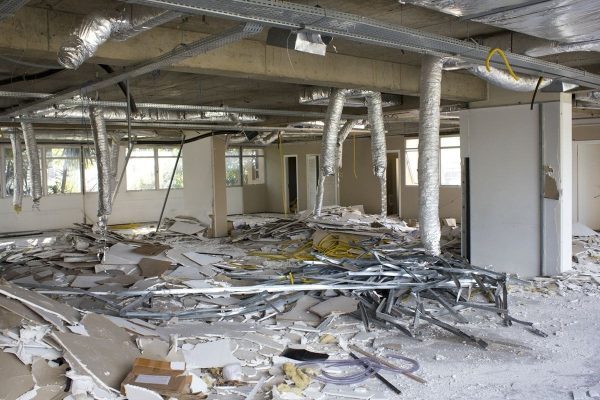
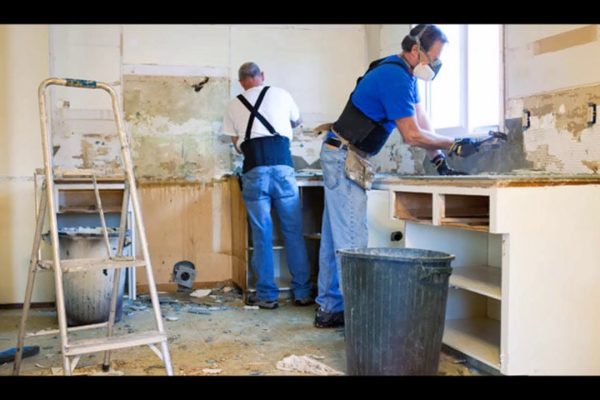
SIMESOTA Restoration removes mold from Coon Rapids homes and fixes the moisture problem behind it. We contain the area, remove moldy materials, clean what can be saved, and dry the space so the growth doesn't come back.
Every mold job we do starts with finding where the water is coming from.
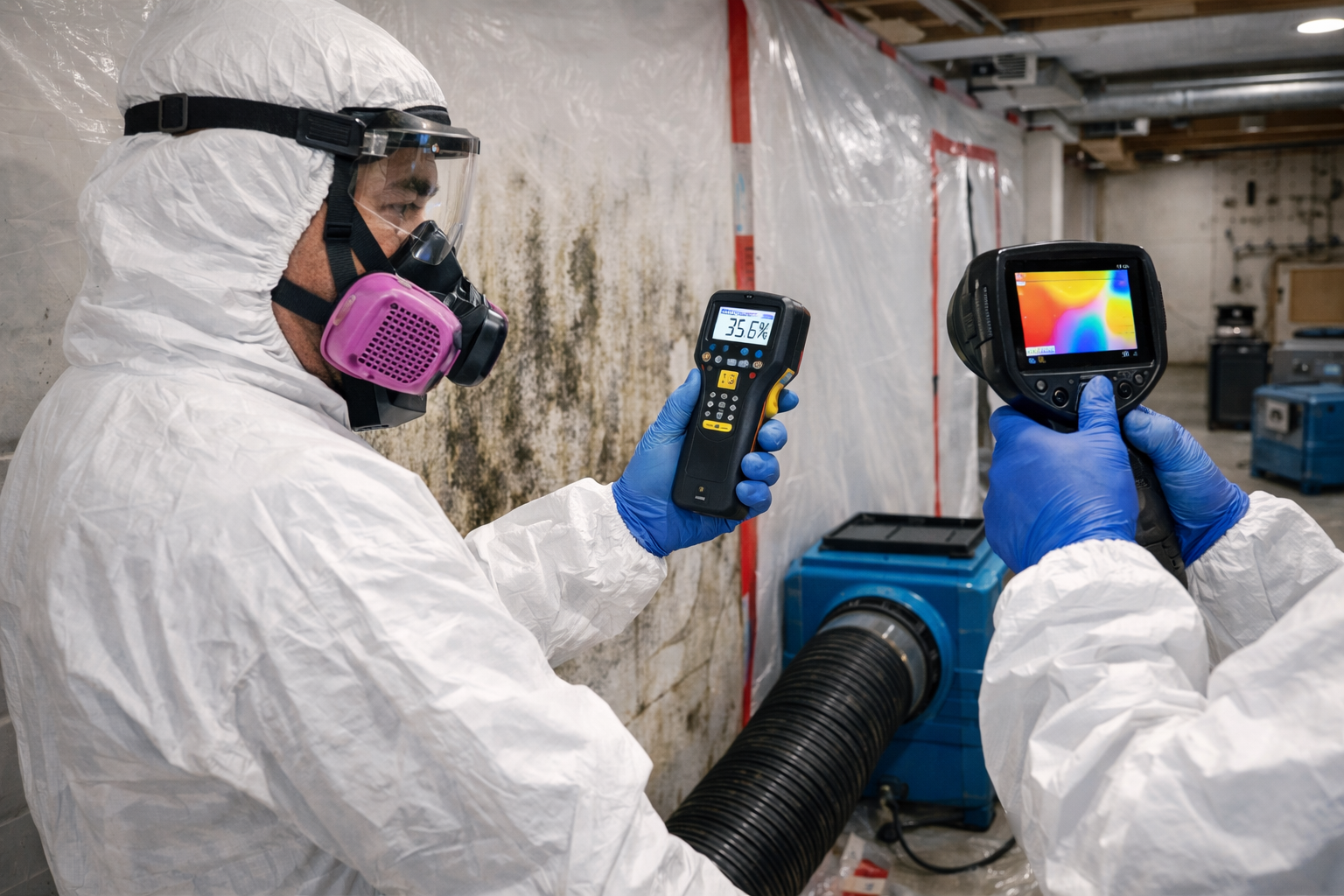
Lower levels are where mold most often starts in Coon Rapids homes. Split-entry and multi-level houses are common across the city, and their lower living space sits partly below grade. Those concrete walls stay cool, and during humid stretches in July and August, moisture condenses on them.
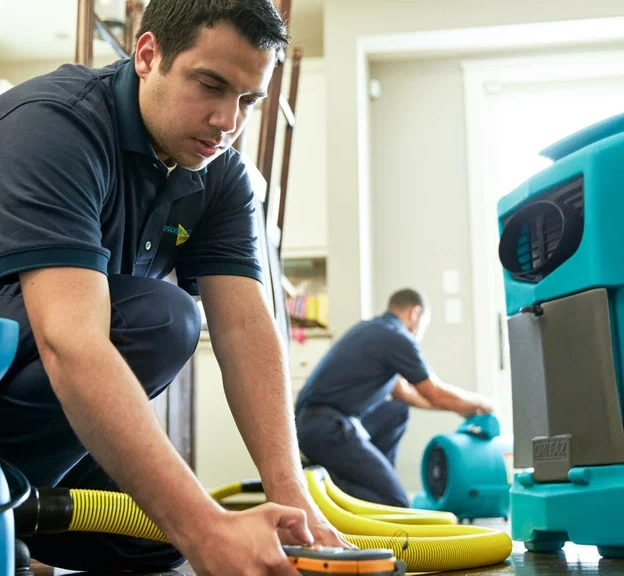
Paneling or drywall installed tight against a foundation wall can hide mold for years. The first sign is often a musty smell in the family room or a stain near the floor on an exterior wall.
Carpet and pad placed directly on a basement slab trap moisture from below. If groundwater seeps in during spring, the pad can stay damp long after the surface feels dry.
A leak that was mopped up but never fully dried can leave wet insulation or framing inside the wall. According to the EPA, mold can start growing on damp materials within 24 to 48 hours. If you've had a leak that was never checked with a meter, our water damage restoration in Coon Rapids team can check it.
Mold remediation means removing mold growth safely and correcting the moisture that caused it.
We look for visible growth, follow the smell, and use moisture meters to find the water source.
We seal off the work area with plastic sheeting and use air filtration to keep spores from spreading. In split-entry homes, the open stairway between levels makes this step especially important.
Moldy drywall, insulation, carpet pad, and other porous materials are bagged and removed.
Framing and hard surfaces that can be saved are cleaned.
We dry the area and address the source, or tell you which trade needs to fix it.
We replace drywall, flooring, and trim once the area is clean and dry.
In most cases, no. The Minnesota Department of Health does not recommend mold testing as a first step when mold can be seen or smelled. The priority is finding the moisture source and removing the growth.
Testing can help in some cases, such as when mold is suspected but can't be found, or to check results after cleanup.
Small areas are often a DIY job. The EPA says homeowners can usually clean up mold themselves if the affected area is less than about 10 square feet, roughly a 3-foot by 3-foot patch.
Fix the moisture first, wear gloves, goggles, and an N-95 respirator, and throw out porous materials that can't be cleaned.
Larger areas, mold inside walls, or growth that came back after cleaning are usually worth a professional look.
Mold and water damage are usually the same problem. Because SIMESOTA handles both, the crew that removes the mold also finds and dries the moisture behind it. You don't have to coordinate two companies.
We're based in Blaine, just east of Coon Rapids. SIMESOTA has a 5.0 rating on Google from 111 reviews and 250 completed jobs. We tell you what we found and what needs to come out before any work begins.
For everything we handle locally, see restoration services in Coon Rapids.
Oscar and his team were fantastic and extremely thorough in the water damage mitigation and restoration of my home.
★★★★★Khalil J, Google reviewOscar and his team exceeded my expectations.
★★★★★Doron C, Google reviewThe Minnesota Department of Health considers any active or visible mold growth something that should be corrected soon. Reactions vary from person to person, and people with allergies or asthma tend to be more sensitive. If you have health concerns, talk with your doctor.
Bleach may lighten mold on hard surfaces, but it doesn't fix growth inside porous materials like drywall, carpet pad, or ceiling tile. Those usually need to be removed. The moisture source also has to be fixed, or the mold returns.
It depends on the size of the area and how much material has to come out. We give you a timeline after the inspection.
Keep lower-level humidity in check. The EPA recommends keeping indoor relative humidity below 60 percent, ideally between 30 and 50 percent. Running a dehumidifier in the lower level during summer and fixing leaks quickly both help.
Coverage often depends on whether the mold came from a covered water event, like a sudden pipe burst. Many policies limit or exclude mold from long-term leaks or humidity.
We'll find the moisture, show you what we see, and give you a clear scope. For our other services, see our full list of restoration services.


11755 Arnold Palmer Trail NE, Blaine, MN 55449, United States
© 2025 SIMESOTA Restoration. All Rights Reserved.